
You put your phone down. The screen goes dark. You’re not scrolling, texting, calling, or using an app.
But your phone hasn’t necessarily gone quiet.
Modern smartphones are designed to stay connected. Even while sitting untouched on a desk, in your pocket, or on a nightstand, your device can continue communicating with cellular networks, Wi-Fi routers, Bluetooth devices, location services, apps, and nearby accessories.
That constant connectivity is useful. It’s also worth understanding if privacy matters to you.
What Is Your Phone Doing While It Sits There?
A smartphone doesn’t need you to actively use it to communicate.
In the background, it may check for notifications, sync email, refresh apps, upload photos, look for nearby Wi-Fi networks, maintain a cellular connection, communicate with Bluetooth accessories, or exchange information needed for location-based services.
Some of this activity is essential to how smartphones work. Some comes from settings you’ve enabled. Other activity can be tied to apps and services running quietly in the background.
The important point is simple: screen off does not mean radio off.
Airplane Mode Isn’t the Same as Isolation
Airplane mode is useful, but it’s easy to assume it does more than it actually does.
Depending on the device and your settings, Wi-Fi and Bluetooth can be turned back on while airplane mode remains enabled. Certain wireless functions may also behave differently across operating systems and device configurations.
Turning your phone off can reduce activity further, but for situations where wireless isolation actually matters, relying entirely on software settings requires trusting the device to behave exactly as expected.
Physical signal isolation takes a different approach.
A properly designed Faraday bag creates a barrier around the device that blocks wireless signals from entering or leaving the enclosure. Instead of asking the phone not to communicate, you’re physically separating it from surrounding networks.
Why Background Connectivity Matters
For most people, background communication is simply part of owning a smartphone. But there are situations where having a device continuously connected may not be desirable.
Travel is a good example. Your phone moves through airports, hotels, rental cars, public Wi-Fi networks, Bluetooth-heavy environments, and unfamiliar locations. Even when you aren’t actively using it, the device is still part of that wireless environment.
The same applies to sensitive meetings, digital investigations, secure facilities, evidence handling, or simply those times when you want a connected device to actually be disconnected.
Privacy isn’t always about abandoning technology. Sometimes it’s about deciding when technology gets to communicate.
What About Wi-Fi and Bluetooth?
Cellular service tends to get most of the attention, but it’s only one part of the picture.
Wi-Fi allows your phone to discover and connect with networks. Bluetooth supports everything from headphones and watches to vehicle systems and tracking accessories. NFC enables short-range communication for things like payments and access systems. GPS and other location technologies add another layer to how devices interact with the world around them.
Modern phones combine several radios and connectivity systems into one device.
That’s what makes them incredibly useful. It’s also why truly isolating a phone is different from switching off one setting.
Creating a Physical Off Switch
This is where Faraday shielding becomes useful.
OffGrid Faraday bags are designed to block wireless communication when a device is properly sealed inside. There’s no app to install and no software permission to manage. The phone goes inside, the bag is properly closed, and the shielding provides a physical layer between the device and outside signals.
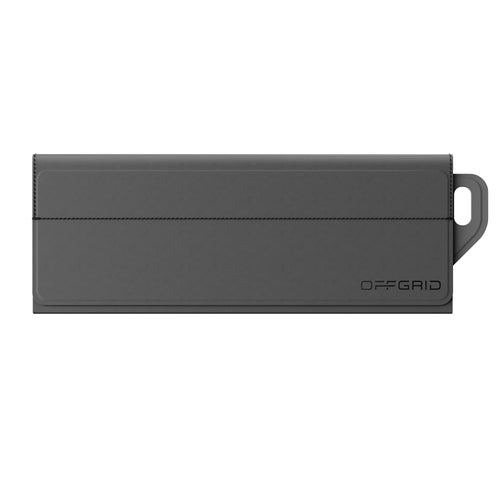
For everyday use, a compact OffGrid Faraday phone bag or Fold Mobile can provide a simple place to isolate a device when you don’t want it connected.
For travel, carrying multiple devices, or professional environments, larger solutions such as the OffGrid Backpack Pro provide dedicated Faraday storage alongside normal everyday storage.
And for digital forensics and evidence handling, purpose-built options such as the OffGrid Extract Faraday Bag make wireless isolation part of the physical handling process.
Different products. Same basic principle: when you need a device disconnected, don’t rely solely on what the screen tells you.
You Don’t Have to Disconnect All the Time
Faraday protection isn’t about keeping your phone sealed away 24/7.
Your phone is supposed to connect. That’s what makes it useful.
The goal is having the ability to decide when that connection stops.
Maybe that’s during a confidential meeting. Maybe it’s while traveling. Maybe it’s overnight. Maybe you’re handling a device that needs to remain isolated. Or maybe you simply want a few hours where your phone isn’t communicating with anything around it.
Whatever the reason, it helps to remember that putting your phone down isn’t the same as disconnecting it.
Your screen may be off. Your phone may still be talking. When you want it truly quiet, go OffGrid.