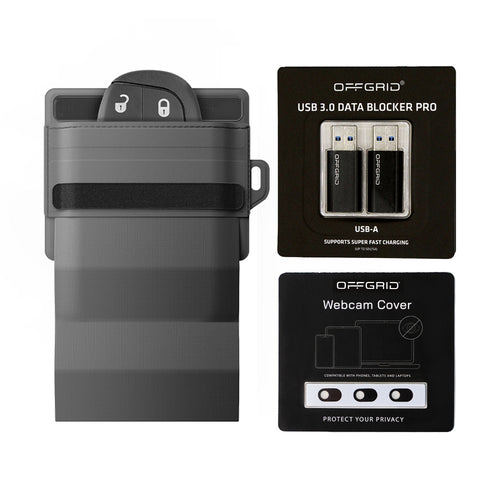

Living off the grid is about more than solar panels and water filters. It’s about control. Control over your power, your resources, and your privacy.
If you're serious about self-reliance, building a complete off-grid privacy kit is just as important as setting up your energy system.
This guide breaks down exactly what you need, why it matters, and how to build a privacy kit that actually works in the real world.
What Is an Off-Grid Privacy Kit?
An off-grid privacy kit is a collection of tools, devices, and habits designed to protect your:
-
Digital privacy
-
Physical privacy
-
Communications
-
Location data
-
Financial activity
Going off grid doesn’t automatically make you private. Your phone, internet connection, and even smart devices can still expose data.
A real off-grid privacy setup closes those gaps.
Why Privacy Matters When Living Off Grid
Many people assume rural living equals anonymity. It doesn’t.
Even in remote areas:
-
Cell phones constantly ping towers
-
Apps track your location
-
Browsers fingerprint your device
-
Smart devices transmit background data
-
Online purchases create digital trails
If your goal is independence, you need systems that reduce digital exposure while maintaining functionality.
Privacy is a layer of resilience.
Step 1: Secure Your Communications
Secure communication is the foundation of any off-grid privacy kit.
1. Encrypted Messaging
Use end-to-end encrypted messaging apps instead of standard SMS.
Look for:
-
Open-source encryption
-
Minimal metadata storage
-
No phone number exposure (if possible)
This protects everyday conversations from being logged or intercepted.
2. Encrypted Email
Avoid mainstream email providers that scan content.
Choose:
-
Privacy-focused providers
-
Encrypted inboxes
-
Custom domain setups
Bonus: Use email aliases for purchases and sign-ups.
3. VPN for Internet Connections
If you use satellite, cellular, or rural broadband, your ISP can log browsing activity.
A no-logs VPN adds a privacy layer by:
-
Masking your IP address
-
Encrypting internet traffic
-
Preventing ISP tracking
For off-grid setups that rely on Starlink or LTE routers, this is essential.
Step 2: Harden Your Devices
Your devices are often the weakest link in your privacy chain.
1. Privacy-Focused Smartphone Setup
Instead of ditching your phone, configure it intentionally:
-
Disable location tracking
-
Remove unnecessary apps
-
Turn off ad identifiers
-
Limit background permissions
-
Use private DNS
If you're serious about digital sovereignty, consider de-Googled Android systems or privacy-first operating systems.
2. Secure Laptop or Desktop
For your off-grid workstation:
-
Use a privacy-focused browser
-
Install tracker blockers
-
Enable full-disk encryption
-
Disable telemetry where possible
If you’re managing solar monitoring, remote property cameras, or online business operations, this matters.
Step 3: Protect Your Location Privacy
Living off grid often means rural land, cabins, or undeveloped property.
Location privacy should be intentional.
1. Metadata Awareness
Photos taken with smartphones often embed GPS coordinates.
Before sharing images:
-
Strip metadata
-
Disable camera geotagging
-
Use privacy tools to remove EXIF data
2. Property Privacy
Consider:
-
No-trespassing signage
-
Secure mail handling
-
P.O. boxes instead of physical address use
-
Shielded Wi-Fi networks
Your off-grid home should not be easily searchable online.
Step 4: Off-Grid Financial Privacy
Financial privacy is often overlooked.
Even if you grow your own food and generate your own power, your purchases leave trails.
Options include:
-
Using privacy-respecting payment methods
-
Avoiding unnecessary subscriptions
-
Reducing data-sharing loyalty programs
-
Segmenting business and personal accounts
The goal is not secrecy. It’s reducing unnecessary data exposure.
Step 5: Build Physical Privacy Layers
Digital privacy is only half the equation.
Physical privacy includes:
-
Shielded storage for sensitive documents
-
Secure storage for hard drives and backups
-
Offline backups of critical data
-
RF-blocking pouches for devices when not in use
If you’re planning long-term resilience, assume grid disruptions or surveillance risks.
Offline redundancy is smart planning.
Step 6: Secure Your Off-Grid Network
Most off-grid homes rely on:
-
Starlink
-
LTE routers
-
Point-to-point wireless
-
Satellite internet
Your network should include:
-
Custom router credentials
-
Disabled remote management
-
Encrypted Wi-Fi (WPA3 or WPA2 minimum)
-
Segmented guest network
-
Firewall configuration
Even remote cabins can be digitally exposed if the router is poorly configured.
Example: A Simple Starter Off-Grid Privacy Kit
If you're just getting started, here’s a basic setup:
-
Encrypted messaging app
-
Privacy-focused email provider
-
No-logs VPN
-
Hardened browser with tracker blocking
-
Full-disk encryption enabled
-
Router password + WPA3 security
-
Metadata disabled on camera
-
Offline backup drive
This alone dramatically improves your digital resilience.
Advanced Off-Grid Privacy Setup
For deeper privacy protection:
-
De-Googled smartphone OS
-
Privacy-first Linux workstation
-
Hardware security keys
-
Self-hosted services
-
Encrypted cloud storage
-
Separate network for IoT devices
At this level, you’re not just off grid. You’re sovereign.
Common Mistakes to Avoid
-
Thinking rural equals anonymous
-
Installing smart devices without reviewing permissions
-
Ignoring router security
-
Sharing property photos with metadata
-
Using the same email everywhere
Privacy leaks usually happen through convenience.
Off-Grid Living Is About Ownership
Building a complete off-grid privacy kit isn’t about paranoia.
It’s about:
-
Owning your data
-
Reducing unnecessary exposure
-
Increasing resilience
-
Designing intentional systems
True independence includes digital independence.
If you're investing in solar panels, battery banks, water filtration, and food storage, your privacy stack deserves the same attention.
Final Thoughts
Off-grid living gives you physical freedom.
A strong off-grid privacy kit gives you digital freedom.
Build both.
Layer by layer.
Intentionally.