
Faraday cages sound like something out of a sci-fi movie, but the science behind them is nearly 200 years old. From protecting early electrical experiments to blocking modern wireless signals, Faraday science plays a critical role in how we secure devices today.
In this article, we’ll break down what a Faraday cage is, where it comes from, and how modern Faraday shielding is used to protect phones, cars, and sensitive electronics in an increasingly connected world.
Who Was Michael Faraday?
Michael Faraday was a 19th-century British scientist whose work laid the foundation for electromagnetism and electrical engineering. Despite having little formal education, Faraday made discoveries that still shape modern technology, including electric motors, generators, and electromagnetic induction.
One of his most famous experiments, conducted in 1836, involved surrounding a room with metal foil and charging it with electricity. Faraday observed that the electrical charge stayed on the outside of the enclosure, leaving the interior unaffected. This experiment became the basis for what we now call the Faraday cage.
What Is a Faraday Cage?
A Faraday cage is an enclosure made of conductive material that blocks electromagnetic fields. When external electrical signals hit the cage, the charge redistributes along the outside surface, preventing the signal from passing through to the interior.
In simple terms, a Faraday cage blocks signals like:
-
Cell service
-
WiFi
-
Bluetooth
-
GPS
-
RFID and NFC
This is why you lose phone reception in elevators, underground garages, or metal shipping containers. The metal acts as a natural signal shield.
How Faraday Shielding Works
Faraday shielding relies on three key principles:
-
Conductive materials such as copper, aluminum, or specialized fabrics absorb and redistribute electromagnetic energy
-
Continuous coverage ensures there are no gaps for signals to leak through
-
Grounding, in some cases, helps safely dissipate electrical charge
Modern Faraday products use layered conductive fabrics instead of rigid metal cages. This allows for portable, lightweight protection while maintaining strong signal blocking performance.
Faraday Cages in the Modern World
Today, Faraday shielding is used across industries, including:
-
Data centers protecting sensitive servers
-
Laboratories conducting electromagnetic testing
-
Automotive security to prevent keyless entry theft
-
Military and law enforcement operations
-
Personal privacy and digital security
As wireless technology expands, so do the risks. Phones constantly transmit data. Cars unlock wirelessly. Credit cards broadcast information at close range. Faraday protection is no longer niche, it’s practical.
Why Faraday Bags Matter Today
Modern threats don’t require physical access. Signal interception, tracking, and remote exploitation are now common concerns.
Faraday bags provide a simple solution by creating a portable Faraday cage around your device. When sealed properly, they prevent all wireless communication in and out.
Common use cases include:
-
Blocking phone tracking and location data
-
Preventing remote access or hacking
-
Securing car key fobs from relay attacks
-
Protecting backup phones and hard drives
-
Maintaining digital privacy while traveling
OffGrid Faraday Protection
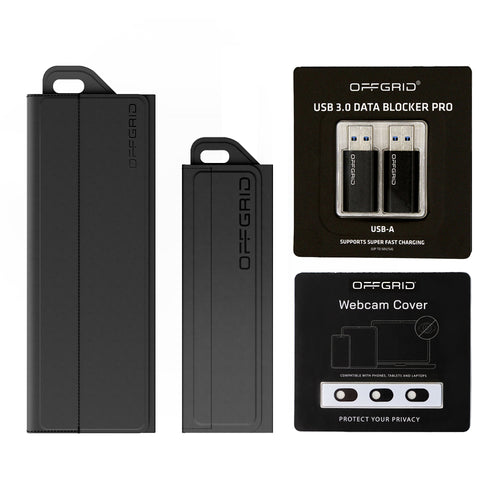
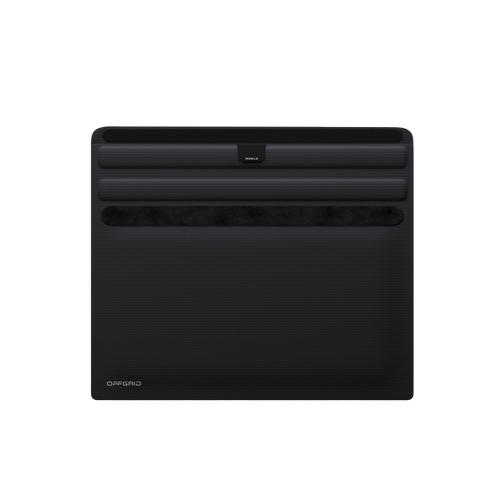
At OffGrid, Faraday science is applied with real-world use in mind. OffGrid Faraday bags are designed using military-grade shielding materials, tested to block cellular, WiFi, Bluetooth, GPS, RFID, and NFC signals.
Unlike improvised solutions or cheap alternatives, OffGrid products focus on:
-
Full signal isolation, not partial blocking
-
Durable construction for everyday carry
-
Multiple size options for phones, tablets, and key fobs
-
Reliable performance over repeated use
Each OffGrid Faraday bag functions as a modern, portable Faraday cage, built for people who take privacy, security, and preparedness seriously.
From 1836 to Everyday Carry
Michael Faraday could not have imagined smartphones, wireless cars, or digital surveillance, but the science he discovered remains unchanged. What started as a foil-lined room is now a compact tool you can carry in your pocket.
Faraday cages are no longer just laboratory equipment. They are everyday defenses in a wireless world.
If you’re looking to apply proven science to modern security, Faraday protection isn’t about paranoia. It’s about control.
And that’s exactly what Faraday science was always meant to give us.