
Radio frequency signals are invisible, silent, and everywhere. They power your phone calls, WiFi, GPS navigation, Bluetooth devices, keyless car entry, and contactless payments. Wireless technology makes life easier. But it also creates new privacy and security risks.
To understand how to protect yourself, it helps to understand the science behind RF signals and how RF blocking actually works.
What Are RF Signals?
RF stands for radio frequency. These are electromagnetic waves that transmit data wirelessly through the air.
When your phone connects to a cell tower, when your laptop joins a WiFi network, or when you tap your card to pay, radio frequency signals carry that information between devices.
Common RF signals include:
WiFi operating at 2.4 GHz and 5 GHz
Bluetooth at 2.4 GHz
Cellular networks across multiple frequency bands
GPS around 1.575 GHz
RFID and NFC used in contactless cards and access badges
These signals travel at the speed of light and can pass through most everyday materials like clothing, backpacks, and walls. That convenience is exactly what makes wireless systems so useful and, at times, vulnerable.
How RF Signals Carry Information
Wireless communication works by converting digital data into modulated radio waves. Your device encodes information into a radio signal pattern, sends it through the air, and a receiving device decodes it back into usable data.
Because RF signals radiate outward from a source, they can often be detected beyond the intended receiver. Even though modern systems use encryption to protect data, encryption does not stop the signal itself from being captured or analyzed.
If a signal can be reached, it can potentially be:
Detected
Amplified
Relayed
Interrupted
This matters for contactless payment cards, keyless entry vehicles, access control badges, and mobile devices carrying sensitive information.
Why RF Signals Can Be Intercepted
Unlike wired connections, radio frequency signals are not physically contained. They spread through open space within a defined range.
For example:
A key fob signal can be captured and relayed to unlock a vehicle
An RFID card can respond to a nearby scanner
A powered-on phone continuously exchanges RF signals with towers and networks
The signals themselves are not harmful. The issue is uncontrolled access. If you cannot control when your device transmits or responds, someone else might.
The Physics Behind RF Blocking
The solution is based on electromagnetic shielding.
When radio frequency waves encounter conductive materials, the electric fields interact with free electrons in that material. If designed properly, the material reflects or absorbs the signal instead of allowing it to pass through.
This is the principle behind a Faraday cage.
A Faraday cage is an enclosure made from conductive material that distributes electromagnetic energy along its exterior surface. The interior becomes isolated from external fields, and internal signals cannot escape.
In simple terms, if a device is inside a properly constructed RF shielding enclosure, it cannot send or receive wireless signals.
What Materials Block RF Signals?
Not all materials block RF signals effectively. The most reliable shielding materials are conductive metals or metallized fabrics such as:
Copper
Aluminum
Nickel
Silver
Engineered shielding textiles
Shielding performance depends on frequency range, material thickness, weave density, and construction quality. Even small gaps or poorly sealed seams can reduce effectiveness. That is why proper design matters just as much as the material itself.
How RF Blocking Products Work
RF blocking bags, pouches, and wallets integrate conductive layers into their construction to create a portable Faraday enclosure.
When a device is sealed inside:
Cellular signals cannot connect
GPS tracking is interrupted
Bluetooth pairing stops
RFID scanners cannot read cards
Key fob signals cannot transmit
The device is fully isolated from wireless communication until removed.
This differs from airplane mode. Airplane mode disables certain transmitters through software, but RF shielding physically prevents signals from entering or leaving the enclosure.
Where OffGrid Comes In
Understanding RF signals is one thing. Controlling them in the real world is another.
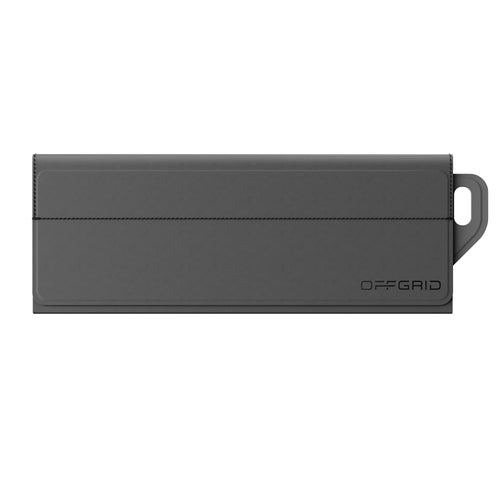
OffGrid designs RF blocking products built on real electromagnetic shielding principles, not just marketing claims. Each product is engineered to create reliable signal isolation across common wireless frequencies, including cellular, WiFi, Bluetooth, GPS, and RFID.
Construction matters as much as materials. OffGrid products are designed with layered conductive shielding, precise stitching, and secure closures to reduce signal leakage. The goal is simple: give you predictable, consistent signal blocking when you need it.
Whether you are protecting a vehicle from relay attacks, isolating a phone for privacy, securing access cards while traveling, or reducing wireless exposure in sensitive environments, OffGrid provides practical RF blocking solutions you can carry every day.
Wireless technology is powerful. Having control over it should be just as easy.
Why RF Awareness Matters
Most conversations about security focus on passwords, encryption, and software threats. Wireless exposure is often overlooked.
Every connected device increases your digital footprint. In many cases, that connectivity is necessary. In others, it creates unnecessary risk.
RF blocking is not about fear. It is about control. It allows you to decide when your devices are reachable and when they are not.
Take Control of Your Signal
Radio frequency signals are part of modern life. They power communication, navigation, payments, and access systems.
But you do not have to be connected at all times.
By using properly engineered RF blocking products, you can reduce unauthorized access, prevent relay attacks, protect sensitive data, and control when your devices transmit.
Explore OffGrid’s RF blocking solutions and take control of your signal with protection built on real science.