
2025 made one thing clear: privacy is no longer a niche concern. It’s a daily reality shaped by the devices we carry, the networks we connect to, and the invisible systems constantly collecting data around us. From large-scale data breaches to increasingly sophisticated tracking methods, the gap between perceived privacy and actual privacy continued to widen.
At the same time, awareness grew. More people started asking better questions. What data is being collected? Who has access to it? How can it be stopped? That shift in mindset is one of the most important takeaways from the past year.
One of the biggest lessons from 2025 is that convenience still comes at a cost. Smart devices, contactless systems, and always-on connectivity made life easier, but they also expanded the surface area for surveillance. Phones, key fobs, passports, and even everyday accessories became sources of signal leakage. The idea that “I’m not a target” proved outdated. Data collection today is broad, automated, and indiscriminate.
Another major development was the normalization of passive tracking. Unlike older forms of surveillance that required active interception, modern systems can identify and monitor devices simply by being nearby. Bluetooth, cellular pings, and RFID signals quietly broadcast information that can be logged, analyzed, and linked over time. In dense urban environments, this kind of tracking became especially effective.
Data breaches also evolved. It wasn’t just about stolen passwords anymore. Entire behavioral profiles, location histories, and device fingerprints were exposed in several high-profile incidents. Once that level of data is out, it’s nearly impossible to contain. The long-term risk isn’t just identity theft, but persistent profiling that follows individuals across platforms and years.
At the same time, governments and regulatory bodies pushed for more oversight, but enforcement lagged behind innovation. While new policies were introduced, the pace of technological change made it difficult to keep protections current. This left individuals increasingly responsible for their own security.
Looking ahead to 2026, several threats are becoming more defined.
Signal-based tracking will continue to grow. As more devices communicate wirelessly, the opportunity for interception expands. The concern is not just hacking, but silent data collection by third parties. Expect more tools designed to map and exploit these signals in real time.
AI-driven surveillance is another area to watch. Machine learning models are becoming better at correlating fragmented data points into complete profiles. Even limited data, when combined and analyzed properly, can reveal patterns about movement, habits, and identity.
Physical-digital crossover threats are also increasing. The boundary between online and offline privacy is disappearing. A device in your pocket can be both a digital endpoint and a physical tracking beacon. Protecting one without the other is no longer enough.
There is also a growing market for data brokerage at a more granular level. Instead of broad datasets, highly specific, real-time information is becoming more valuable. This includes location signals, device identifiers, and short-term behavioral data that can be sold and acted on almost instantly.
What does this mean in practice? It means privacy protection needs to be proactive, not reactive. Waiting until data is exposed is too late. The focus has to shift toward minimizing what is emitted in the first place.
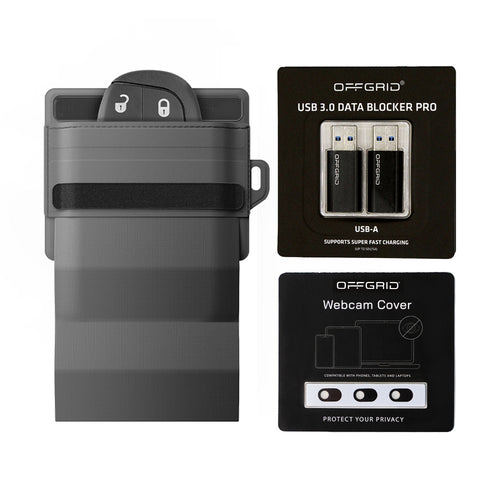
That’s where physical-layer privacy is gaining attention. Instead of relying solely on software settings or policies, more people are looking at ways to control the signals their devices give off. Blocking, isolating, and managing those signals is becoming a foundational step in personal security.
Everyday carry is evolving alongside this mindset. Items that were once purely functional are now expected to provide some level of protection. Carrying a phone, a wallet, or a key is no longer just about convenience. It’s about understanding what those items transmit and how to control it.
The broader trend is clear. Privacy is shifting from an abstract concept to something tangible and measurable. People are starting to think in terms of exposure rather than just data. What is being broadcast right now? Who can see it? How can it be reduced?
As 2026 approaches, the individuals and organizations that take privacy seriously will be the ones that adapt early. The tools and habits developed now will define how resilient people are against the next wave of threats.
The takeaway from 2025 isn’t just that risks increased. It’s that the model of passive trust no longer works. Privacy requires intention. It requires awareness of both digital systems and physical signals. And it requires a willingness to rethink what “secure” really means in a world where everything is connected.
The good news is that awareness is catching up. More people are paying attention. More solutions are emerging. And the conversation is finally moving in the right direction.