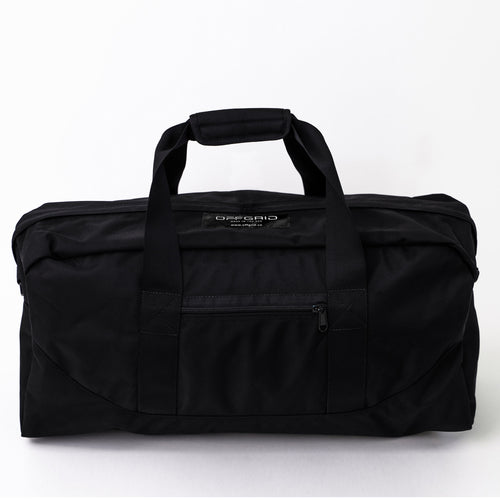

Faraday bags are one of those products people either dismiss as “prepper gear” or swear by like it’s a seatbelt for your digital life.
So what’s true?
Are Faraday bags worth it, or are they mostly marketing?
Let’s break it down with real-world logic, what the science actually says, and the situations where a Faraday bag is genuinely one of the smartest pieces of gear you can own.
What Is a Faraday Bag, Really?
A Faraday bag is a portable version of a Faraday cage: a shielded enclosure that blocks electromagnetic signals from reaching whatever’s inside.
In plain terms, a good Faraday bag can prevent a device from:
-
receiving calls and texts
-
sending location data
-
connecting to Wi-Fi or Bluetooth
-
being scanned via RFID or NFC
-
being remotely accessed through a wireless connection
That’s the “promise.”
The question is whether they actually deliver.
Do Faraday Bags Actually Work?
Yes — if they’re built correctly.
The physics behind Faraday shielding is well-established. Conductive layers distribute electromagnetic energy across the outside surface, reducing what gets through to the inside.
But here’s the important part most people miss:
Not all Faraday bags are created equal.
A cheap Faraday pouch might block a cell signal but fail against:
-
modern 5G bands
-
GPS
-
high-power readers
-
signal leakage from weak seams
-
wear and tear over time
And a bag that works “in your kitchen test” might not hold up in real use.
That’s why you’ll see wildly different reviews online. People aren’t testing the same product, or even testing the same way.
The Two Real Reasons People Buy Faraday Bags
Most people think Faraday bags are about one thing: privacy.
In reality, there are two distinct use cases.
1) Signal Blocking (Privacy + Location Control)
If you put a phone in a Faraday bag and it’s sealed properly, it can’t transmit or receive signals.
That means:
-
no location pings
-
no “Find My” tracking
-
no silent Bluetooth scanning
-
no cellular handshake data
-
no Wi-Fi probing
2) Protection From Electronic Threats
This is where the conversation gets spicier.
Faraday shielding can also reduce exposure to certain electromagnetic events, including high-energy interference.
This category includes things like:
-
localized electrical surges
-
certain types of interference events
-
high-powered signal exposure
-
and in more extreme discussions: EMP-related concerns
Important note: A Faraday bag is not a magic force field. But quality shielding can absolutely reduce risk in realistic scenarios.
The “Worth It” Question Depends on Your Threat Model
Let’s be honest: if your biggest worry is a stranger reading your texts from across the street, you probably don’t need a Faraday bag.
But if your concern is any of the following, the answer changes fast.
Scenario 1: Blocking RFID & NFC Theft (Yes, It’s Real)
If you carry:
-
contactless credit cards
-
hotel key cards
-
modern passports
-
NFC-enabled IDs
-
car key fobs
…you’re carrying devices designed to respond to wireless scans.
Can someone steal your card info by walking past you?
In practice, it’s not as easy as TikTok makes it look.
But RFID/NFC scanning attacks are real, and the risk isn’t zero. The easiest wins for attackers are:
-
crowded environments
-
distracted people
-
predictable targets (travelers)
A Faraday bag or Faraday wallet is a clean solution because it blocks the scan entirely.
Verdict: Worth it if you travel, attend events, or carry RFID-enabled items.
Scenario 2: Key Fob Relay Attacks (This Is the Big One)
This is where Faraday bags stop being “niche” and start being practical.
A key fob relay attack works like this:
-
Your key fob is inside your house.
-
Thieves use a relay device near your door to “extend” the fob’s signal.
-
Another device near the car receives it.
-
The car thinks the key is nearby and unlocks/starts.
This type of theft has been documented for years and it’s still a major vulnerability in many vehicles.
A Faraday pouch designed for key fobs prevents the signal from being relayed in the first place.
Verdict: If you own a push-to-start car, a Faraday pouch is one of the highest ROI security purchases you can make.
Scenario 3: Privacy and “Off-Grid” Travel
If you’re hiking, camping, or doing remote travel, you may not want:
-
passive location tracking
-
background syncing
-
constant wireless searching that drains battery
-
Bluetooth-based tracking systems
A Faraday bag gives you a hard off-switch that’s more reliable than airplane mode.
Because airplane mode:
-
can be overridden by certain settings
-
can still leave Bluetooth active
-
still allows certain background behavior depending on the device
If you’re truly trying to minimize digital footprint, Faraday shielding is the cleanest way.
Verdict: Worth it if you care about privacy in the real world, not just in theory.
Scenario 4: Emergency Preparedness and Communication Resilience
This is where Faraday bags get controversial because people jump straight to worst-case scenarios.
Let’s keep it grounded.
A Faraday bag can be a useful part of a preparedness setup if you want to store:
-
a backup phone
-
a handheld radio
-
a GPS device
-
battery packs
-
critical cables and adapters
The goal is simple: protect backup electronics from unexpected damage or interference, and keep a set of devices stored safely and ready.
Whether you’re preparing for storms, grid issues, or remote travel emergencies, redundancy matters.
Verdict: Worth it if you have backup electronics you actually rely on.
What the Data and Testing Usually Shows
Here’s what most decent Faraday tests reveal:
A quality Faraday bag should block:
-
cellular (4G and 5G)
-
Wi-Fi (2.4 GHz and 5 GHz)
-
Bluetooth
-
GPS
-
NFC/RFID
But performance depends heavily on:
-
material quality
-
seam construction
-
closure design (Velcro, roll-top, magnetic seal)
-
how worn the bag is
-
whether the device is pressed against the edge
-
frequency band being tested
This is why the “just call your phone” test is not enough.
A bag can block cellular but still leak Bluetooth.
Or block Wi-Fi but leak GPS.
Real Faraday performance is multi-band performance.
The Hidden Problem: Most People Use Them Wrong
This is the part nobody wants to hear.
A lot of Faraday bag failures are user error.
Common mistakes:
-
not fully sealing the opening
-
storing the device too close to the seam
-
assuming a worn-out bag still performs like new
-
using the wrong size (stuffed too tight = poor shielding)
-
buying a bag designed for RFID and expecting full phone isolation
If you’re going to buy one, buy a real one and use it correctly.
So… Are Faraday Bags Worth It?
Yes, Faraday bags are worth it if you want any of the following:
-
key fob theft prevention
-
reliable signal blocking beyond airplane mode
-
protection for backup devices during travel or emergencies
-
privacy in high-risk or high-surveillance environments
-
RFID/NFC scan protection
No, they’re not worth it if:
-
you want a gimmick
-
you don’t care about tracking
-
you don’t have any meaningful electronics to protect
-
you’re buying the cheapest option and expecting miracles
What to Look For in a Good Faraday Bag
If you’re shopping, focus on a few practical traits:
1) Multi-band shielding
If it only mentions RFID, it may not block phones.
2) Durable construction
The bag will be opened and closed constantly. Weak seams fail fast.
3) A real closure system
If the opening leaks, the bag leaks. Period.
4) The right size
A bag that’s too tight can compromise shielding.
5) Designed for the use case
A key fob pouch and a phone bag are not the same thing.
Why OffGrid Built Faraday Bags for Real-World Use
At OffGrid, we’re not interested in fear-based marketing.
We’re interested in practical gear that solves real problems:
-
signal isolation you can trust
-
build quality that holds up over time
-
designs that match how people actually travel, store, and carry devices
-
protection for key fobs, phones, and everyday electronics
Because a Faraday bag is only “worth it” if it works when it matters.
And if you’ve ever dealt with key fob theft, unexpected tracking, or a compromised device, you already know: the cost of being wrong is usually higher than the cost of good gear.
Final Take
Faraday bags aren’t magic. They’re not paranoia in fabric form, either.
They’re a tool.
And like any tool, they’re worth it when the problem is real.
If you want to stop relay attacks, reduce passive tracking, protect critical electronics, or keep your off-grid setup truly off-grid, a well-made Faraday bag is one of the simplest and most effective upgrades you can make.