
Privacy in 2026 isn’t what it used to be. Surveillance is no longer just about cameras or cookies. It’s ambient, constant, and increasingly invisible. Your phone, your car, your wearables, even everyday accessories can quietly emit signals that expose your location, habits, and identity.
If you care about staying off the grid, you need more than awareness. You need a system.
This is your complete OffGrid privacy checklist for 2026. Not theory. Not paranoia. Just practical steps to reduce your digital and physical exposure in a world that’s always listening.
Start with Your Biggest Leak: Your Phone
Your smartphone is the single most powerful tracking device you own. Even when you’re not actively using it, it broadcasts signals through cellular, WiFi, Bluetooth, and ultra-wideband radios.
In 2026, passive tracking has become more precise. Retail spaces, airports, and urban infrastructure can identify and follow devices without requiring connection. That means “I turned off WiFi” isn’t enough anymore.
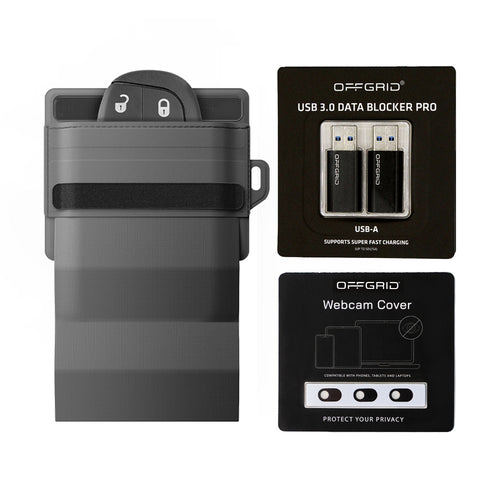
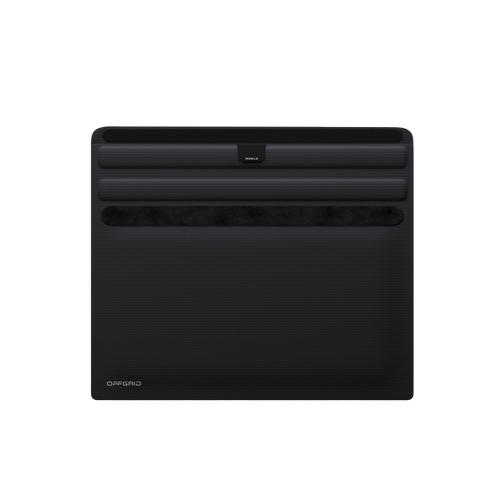
If you’re serious about privacy, you need physical signal isolation. A Faraday bag isn’t optional, it’s foundational. When your phone is inside, it stops transmitting and receiving signals entirely. No pings, no triangulation, no silent data exchange.
Make it a habit. When you don’t need connectivity, your device should be shielded.
Audit Your Everyday Carry (EDC)
Privacy isn’t just about your phone. Modern EDC items often contain RFID or NFC chips. Credit cards, passports, key fobs, and access badges can all be skimmed wirelessly.
Skimming technology has improved to the point where proximity alone is enough. You don’t need to hand anything over. A crowded space is all it takes.
Use RFID-blocking wallets or sleeves for anything that carries embedded chips. This isn’t about extreme scenarios. It’s about removing easy opportunities for data capture.
Think of it like locking your door. Basic, but essential.
Control Bluetooth Exposure
Bluetooth has quietly become one of the biggest privacy vulnerabilities. Devices constantly scan for connections, and that scanning behavior itself can be tracked.
Headphones, smartwatches, cars, fitness trackers, and even luggage tags all contribute to your digital footprint. Many of these devices broadcast unique identifiers that can be logged and correlated over time.
Turn Bluetooth off when you’re not using it. Not idle. Off.
And when you are using it, be aware of where you are. Public environments increase the risk of passive tracking networks collecting your device signals.
Rethink Location Services
Location tracking in 2026 is layered. GPS is just one piece. Apps can infer your position through nearby networks, motion sensors, and behavioral patterns.
Go through your app permissions and strip location access down to the absolute minimum. “Always allow” should be rare. “While using” is better. “Never” is often best.
But software controls have limits. If your device is emitting signals, it can still be located. That’s why combining settings with physical shielding creates real privacy.
Protect Your Travel Profile
Travel is one of the easiest times to be tracked. Airports, hotels, rental cars, and public transit systems are dense with sensors and data collection points.
When moving through high-surveillance environments, keep devices shielded when not actively needed. Avoid leaving electronics exposed in hotel rooms. Be mindful of keycards and access systems that log movement.
Your travel pattern tells a story. The goal is to reduce how much of that story gets recorded.
Secure Your Vehicle Signals
Modern vehicles are increasingly connected. Keyless entry systems, Bluetooth pairing, GPS navigation, and telematics all generate data.
Relay attacks on key fobs remain a real threat. If your car uses wireless keys, store them in a Faraday pouch when not in use. This prevents signal amplification attacks that can unlock or start your vehicle remotely.
Inside the car, be cautious about what devices you pair and what permissions you grant. Your vehicle can become an extension of your data profile.
Be Intentional with Wearables
Smartwatches and fitness trackers collect continuous biometric and location data. In isolation, that might seem harmless. Combined over time, it becomes deeply revealing.
If you use wearables, understand what they’re transmitting and when. Disable unnecessary connectivity features and avoid constant syncing when possible.
And remember, even passive signals can be tracked. If privacy matters in a given moment, remove or shield the device.
Understand the Power of Signal Silence
The most effective privacy move isn’t hiding better data. It’s producing less of it.
Every signal you emit is a potential data point. Every connection is a potential record. The fewer signals you broadcast, the less there is to track.
This is where Faraday gear stands apart. It doesn’t rely on settings, policies, or trust. It creates a physical barrier that blocks signals entirely.
No signal means no tracking. It’s that simple.
Build a Habit, Not a One-Time Fix
Privacy isn’t something you set and forget. It’s a behavior.
You don’t need to live disconnected. You just need to be intentional about when you’re connected. Use your devices when you want to. Go dark when you don’t.
That shift alone puts you ahead of most people.
The OffGrid Standard
At OffGrid, the goal isn’t fear. It’s control.
You decide when your devices communicate. You decide what gets exposed. You decide how visible you are.
In 2026, that level of control is rare. But it’s still possible.
It starts with awareness. It becomes real with the right gear.
And once you experience true signal privacy, you won’t go back.