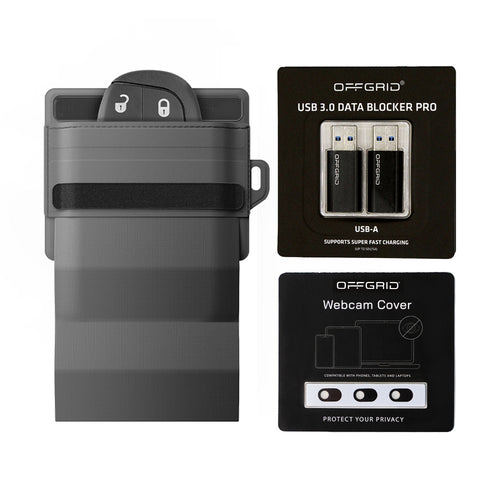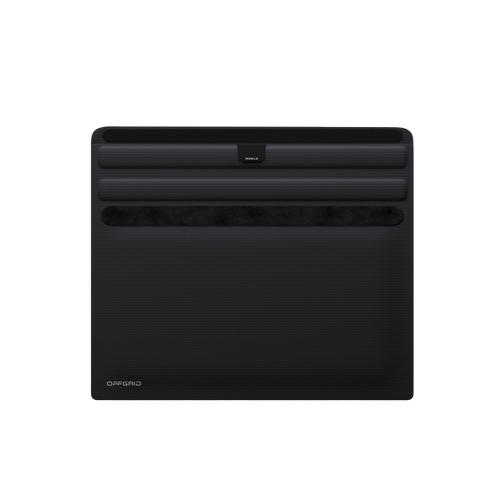

Shopping for Faraday bags, Faraday pouches, or Faraday backpacks online can feel like a minefield.
One listing says “RFID blocking.” Another says “Faraday certified.” Another says “military grade signal blocking.”
And then you get it… and your phone still rings inside it.
Fake Faraday products are everywhere, especially on big marketplaces and social platforms. Some are harmless junk. Others are dangerously misleading if you’re buying for privacy, security, or anti-tracking protection.
This guide breaks down how to spot fake Faraday products online, what claims are red flags, and what to look for if you want real signal blocking.
Quick Answer: What Is a Fake Faraday Product?
A real Faraday product blocks wireless signals by using conductive layers that form a sealed enclosure.
A fake Faraday product usually does one of these:
-
Blocks only RFID (not phones)
-
Blocks weakly, but not reliably
-
Works only in “perfect” conditions
-
Has gaps, cheap seams, or no real shielding layer
-
Uses misleading wording like “EMF protection” instead of true signal blocking
Why Fake Faraday Bags Are So Common
Faraday protection is hard to verify from a product listing.
And unfortunately, the term “Faraday” is not regulated.
So sellers can slap it on almost anything:
-
Nylon pouches
-
Thin “silver” fabric
-
Basic RFID wallets
-
Random “EMF shielding” wraps
If you’re buying a Faraday bag for phone privacy, key fob protection, anti-theft, or anti-tracking, those fakes aren’t just annoying. They can completely defeat the purpose.
9 Ways to Spot Fake Faraday Products Online
1) The Listing Says “RFID Blocking” but Not “Signal Blocking”
This is the #1 trick.
RFID blocking usually refers to 13.56 MHz credit card signals, not the frequencies phones use.
A real Faraday phone pouch should explicitly mention blocking:
-
Cellular (4G/5G)
-
WiFi (2.4 GHz / 5 GHz)
-
Bluetooth
-
GPS
If the listing only says “RFID,” it’s probably not a real Faraday product.
2) It Uses Vague Terms Like “EMF Protection”
This is another huge red flag.
“EMF shielding” is often used in wellness marketing. It does not automatically mean the product blocks wireless communications.
If the listing focuses on:
-
“radiation protection”
-
“anti-EMF”
-
“health shielding”
-
“reduce exposure”
…but doesn’t mention cellular, WiFi, GPS, Bluetooth, it’s likely not built for real-world signal blocking.
3) The Product Has No Inner Liner or Shielding Layer
A real Faraday pouch has a distinct internal layer.
Many fakes are just a normal fabric pouch.
Good listings will show:
-
A visible inner liner
-
Close-up photos of the shielding material
-
Multiple layers
If all photos are generic lifestyle images, be cautious.
4) The Seller Avoids Testing Details
Real Faraday brands usually talk about how they test.
Fake listings tend to say things like:
-
“tested”
-
“verified”
-
“proven”
-
“certified”
…but provide no actual info.
Look for specifics:
-
Which signals were tested
-
Real test conditions (not vague “lab tested” claims)
-
Real results (not just marketing copy)
5) It Claims “100% Blocking” With No Caveats
Even the best Faraday bags can fail if:
-
The pouch is not fully sealed
-
The phone is too close to an opening
-
The bag is worn out or damaged
-
The product is too small for the device
So if a random seller promises “100% guaranteed blocking in all conditions,” that’s a sign they don’t understand the product.
High-quality Faraday brands talk about fit, closure, and proper use.
6) The Closure Design Is Weak (or Not a Real Seal)
This is where most cheap Faraday bags fail.
Common weak designs:
-
Loose flap with no structure
-
Thin Velcro that doesn’t fully cover the opening
-
Magnetic snap closures
-
Zippers with gaps
-
Open-top sleeves
A Faraday pouch must close in a way that prevents signal leakage.
If you can see daylight through the opening, signals can get through too.
7) The Price Is Too Good to Be True
A real Faraday product requires:
-
Conductive shielding fabric
-
Multiple layers
-
Strong stitching
-
Durable closures
-
Quality control
If you see a “Faraday phone pouch” for $9.99 with free shipping, you’re almost always looking at a fake or weak product.
8) The Reviews Sound Weirdly Generic
Fake Faraday listings often have reviews like:
-
“Works great!”
-
“High quality”
-
“Very satisfied”
-
“Good product”
But Faraday products should have specific reviews:
-
“My phone had no signal”
-
“Bluetooth disconnected immediately”
-
“My car key stopped transmitting”
-
“GPS stopped updating”
If reviews don’t mention signals at all, that’s suspicious.
9) The Product Photos Don’t Match Reality
A lot of counterfeit Faraday products use copied images.
Red flags include:
-
Watermarks from other brands
-
Inconsistent logo placement
-
Stock photos that look too polished
-
No real photos of the interior
If the listing looks like it was thrown together quickly, trust your instincts.
How to Test a Faraday Bag at Home (Fast)
If you already bought one, here are simple ways to test it.
Test 1: Cellular
Put your phone inside, seal it fully, then call it.
If it rings or receives notifications, it’s not working.
Test 2: Bluetooth
Start playing audio to Bluetooth headphones.
Put the phone inside and seal it.
If the audio continues, the shielding is weak or leaking.
Test 3: GPS
Open a maps app, start navigation, then seal the phone inside.
If location continues updating, it’s not blocking GPS reliably.
Tip: Some phones cache location briefly, so give it a minute.
Common “Faraday” Products That Are Usually Fake
These are frequently mislabeled online:
-
RFID wallets marketed as Faraday wallets
-
“EMF phone cases” marketed as Faraday cases
-
Key fob pouches with thin fabric and loose flap closures
-
Generic Faraday backpacks with no sealed compartments
-
Any product that only blocks “radiation” but not signals
What to Look for in a Real Faraday Product
If you want a real Faraday bag, Faraday pouch, or Faraday backpack, look for:
-
Signal types listed clearly (cell, WiFi, Bluetooth, GPS)
-
Real closure system (not loose fabric)
-
Durable seams and stitching
-
Visible shielding liner
-
Real-world testing instructions
-
A brand that specializes in signal-blocking gear
Why OffGrid Faraday Gear Is Different
OffGrid builds Faraday products for real-world use, not gimmicks.
That means:
-
Designed to block real signals, not just RFID
-
Built with durable materials and reliable closure systems
-
Made for everyday carry, travel, and security use cases
-
Designed so you can test it yourself in seconds
If you’re shopping because privacy matters, your Faraday gear needs to work when it counts.
Final Checklist: Spot a Fake Faraday Listing in 10 Seconds
Before you buy, ask:
-
Does it mention blocking cellular, WiFi, Bluetooth, and GPS?
-
Does it show the inner shielding layer?
-
Does the closure look fully sealed?
-
Are the reviews signal-specific?
-
Is the price realistic?
If the answer is “no” to most of those, keep scrolling.