
Bluetooth devices are everywhere. Wireless earbuds, fitness trackers, smart keys, keyboards, and wearables make daily life easier, but they also introduce a quiet privacy risk most people never think about.
Bluetooth signals can be tracked, intercepted, and exploited without your knowledge. The good news is that protecting yourself does not require advanced technical skills. With a few smart habits and the right tools, you can significantly reduce your exposure.
This guide explains how Bluetooth tracking works, the most common threats, and how OffGrid products help protect Bluetooth devices from tracking and interception.
Why Bluetooth Devices Are a Privacy Risk
Bluetooth devices constantly emit radio signals. These signals help devices connect seamlessly, but they also create a digital trail that can be observed by anyone nearby.
Common Bluetooth privacy risks include:
-
Passive location tracking through Bluetooth identifiers
-
Interception of unencrypted Bluetooth traffic
-
Unauthorized pairing and device spoofing
-
Data leakage in crowded public spaces
Devices like wireless earbuds, smartwatches, and key fobs are especially vulnerable because they are designed to stay connected at all times.
How Bluetooth Tracking and Interception Actually Happen
Bluetooth Tracking Through Persistent Signals
Many Bluetooth devices broadcast unique identifiers. Even when you are not actively using them, these signals can be logged and linked over time.
This allows tracking across places like:
-
Airports
-
Coffee shops
-
Offices
-
Gyms
-
Public transit
Over days or weeks, these signals can reveal routines, habits, and movement patterns.
Bluetooth Interception Attacks
Bluetooth interception does not always look like hacking in movies.
In real life, attackers can:
-
Intercept audio from wireless headphones
-
Capture keystrokes from Bluetooth keyboards
-
Exploit weak pairing methods
-
Access devices with outdated firmware
Public spaces dramatically increase these risks.
Everyday Steps to Protect Bluetooth Devices
Turn Bluetooth Off When You Do Not Need It
If Bluetooth is off, it cannot be tracked.
This single habit eliminates most passive tracking risks. Disable Bluetooth when you are commuting, traveling, or not actively using a device.
Limit Bluetooth Discoverability
Many devices remain discoverable longer than necessary.
Set your devices to:
-
Only be discoverable during pairing
-
Automatically hide after connection
This reduces unwanted scanning.
Keep Software and Firmware Updated
Bluetooth security vulnerabilities are discovered regularly.
Always update:
-
Your phone and laptop operating systems
-
Firmware for Bluetooth accessories
Outdated devices are easy targets.
Remove Old or Unknown Pairings
Old pairings create unnecessary exposure.
Periodically remove:
-
Devices you no longer own
-
Rental cars
-
Hotel systems
-
Unknown connections
This helps prevent unauthorized access.
How OffGrid Products Help Protect Bluetooth Privacy
Even with good habits, Bluetooth devices still emit signals when powered on. This is where physical signal control becomes essential.
OffGrid products are designed to block wireless signals at the source, including Bluetooth, when devices are not in use.
Physical Signal Blocking for Bluetooth Devices
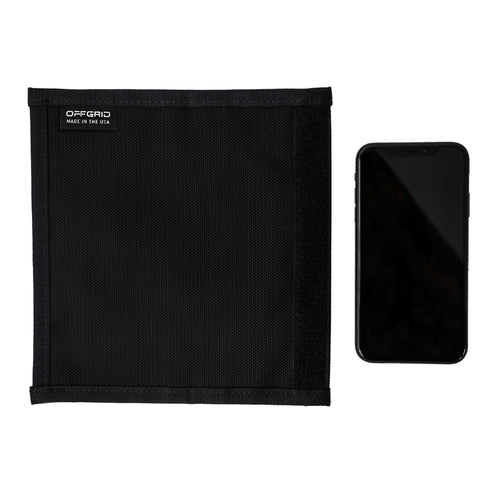
OffGrid signal-blocking cases and pouches prevent Bluetooth signals from being transmitted or received.
This helps protect against:
-
Bluetooth tracking beacons
-
Passive signal logging
-
Unauthorized connections
-
Interception attempts
When your device is inside an OffGrid product, it effectively goes silent.
Protection for High-Risk Bluetooth Devices
OffGrid products are especially useful for:
-
Wireless earbuds and headphones
-
Smart keys and key fobs
-
Fitness trackers and wearables
-
Backup phones and accessories
These devices often stay powered on and broadcasting, even when you are not using them.
Privacy Without Changing Your Workflow
One of the biggest advantages of OffGrid products is simplicity.
You do not need to:
-
Install apps
-
Change settings constantly
-
Trust software-based solutions
When your device goes into an OffGrid bag, Bluetooth tracking stops automatically.
Bluetooth Privacy Best Practices Combined with OffGrid
For the strongest Bluetooth privacy protection:
-
Turn Bluetooth off when possible
-
Disable discoverability
-
Keep devices updated
-
Avoid pairing in public
-
Remove unused pairings
-
Use OffGrid signal-blocking products when devices are idle
This layered approach protects both your digital and physical privacy.
Final Thoughts
Bluetooth tracking and interception are real-world privacy threats, not edge cases.
Most people do not need to abandon Bluetooth. They just need better control over when their devices are broadcasting.
OffGrid products give you that control.
Privacy is not about hiding. It is about choosing when you are visible.